
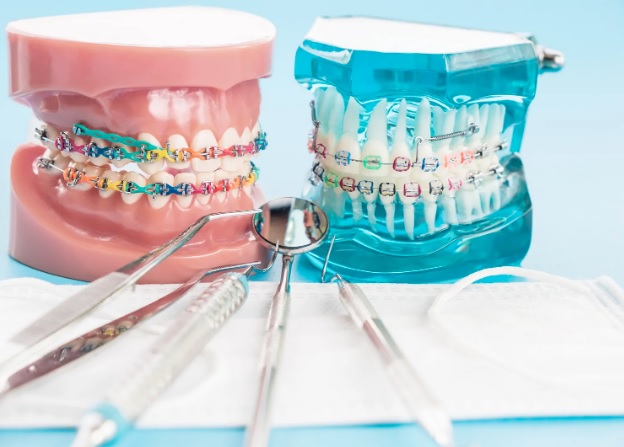
Orthodontics is the area of dentistry concerned with correcting irregularities in the position of the teeth and jaws, usually using braces or clear aligners.
Orthodontic treatment may be provided by a general dentist working within their scope of practice, or by a registered specialist orthodontist. All specialist orthodontists are dentists, but a dentist may only use the title “orthodontist” if they hold specialist registration in orthodontics with the Dental Board of Australia. That requires three years of full-time postgraduate training beyond a dental degree, followed by specialist registration.
You can check any practitioner’s registration, and whether they hold specialist registration, on the Ahpra public register.
Braces cost in Sydney
Published price guides put fixed braces in Sydney at roughly $8,000 to $15,000. These are indicative figures drawn from published sources rather than quotes.
Fees vary with the appliances required, the complexity of the case and the length of treatment. A fee for your own case can only be given after examination and treatment planning.
Braces at North Sydney Dentistry
Fixed braces are provided at our other practices: Hornsby Dental and North Ryde Dentistry at Macquarie Park.
Fees start from $4,500 and range to $6,000 or more depending on the complexity of the case.
Choosing between the options
Orthodontic treatment differs from patient to patient, and options include fixed braces and Invisalign. Cost is one consideration, but which appliance is appropriate is a clinical judgement rather than a matter of budget or preference alone. Neither appliance is consistently cheaper or consistently better; it depends on the case.
Your practitioner should explain which options are appropriate for you and why, together with the risks, the expected duration and the total cost. In some cases a general dentist will refer a patient to a specialist orthodontist Sydney, and in others a specialist will refer back for general dental care.
What treatment involves
Fixed braces use brackets bonded to the teeth holding a wire that applies pressure to move them. Elastic modules holding the wire in place are available in different colours.
Treatment takes time and the duration varies considerably between patients. Adjustment appointments are typically needed every four to eight weeks so the appliance can be checked and adjusted.
At the end of treatment the appliances are removed, the teeth are cleaned, and retainers are fitted. Retainers must be worn as directed, generally long term, because teeth tend to move back towards their original positions if they are not. See general information on teeth cleaning.
Risks
Orthodontic treatment carries risks. These can include discomfort and tooth sensitivity, ulceration and irritation of the lips and cheeks, decalcification and decay around brackets where oral hygiene is not maintained, shortening of tooth roots, gum recession, and relapse after treatment. Some cases require extractions or additional procedures, and treatment may take longer than estimated.
Results vary between individuals and no outcome can be guaranteed. These risks should be explained to you in full, and you should receive a written quote, before you agree to treatment.
To arrange an assessment, contact North Sydney Dentistry.