
Many people considering orthodontic treatment as adults are reluctant to wear fixed metal braces. Clear aligners are one alternative worth discussing with a dentist.
This article covers what affects Invisalign cost in Sydney, what the treatment involves and its limitations.
How Clear Aligners work
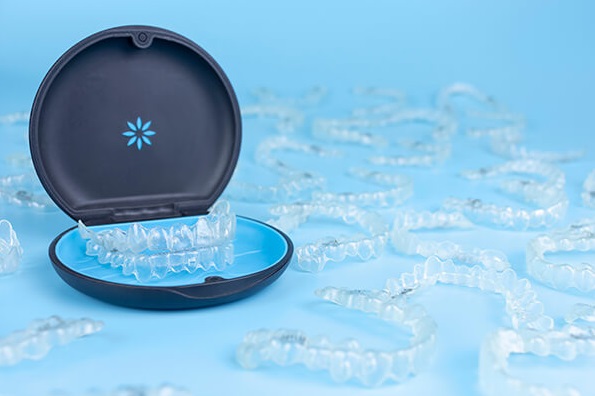
Invisalign is a clear aligner system. The aligners are made from a transparent medical-grade plastic, custom-made from scans of your teeth, and worn in sequence to move teeth gradually into a planned position.
They are removable, which means you take them out to eat and drink and to clean your teeth. It also means the treatment depends on you wearing them as directed, generally 20 to 22 hours a day.
What Clear Aligners can offer
- Appearance
Clear aligners are less noticeable than metal brackets and wires, which is why some adults and older teenagers prefer them. They are not invisible: the aligners can be seen at close range, as can the small attachments bonded to the teeth during treatment.
- Comfort and convenience
The aligners are smooth plastic with no brackets or wires. Most people experience pressure, tenderness or tooth sensitivity for a few days after changing to a new aligner, and some experience irritation of the tongue, lips or gums or a temporary effect on speech.
- Suitability
Clear aligners can be used for a range of orthodontic problems including crowding, spacing and some bite corrections. They are not suitable for every case, and some tooth movements are more predictably achieved with fixed appliances. Treatment length varies with the case; published ranges of around 12 to 18 months are commonly quoted but the actual duration is determined by your treatment plan and may be longer. Some cases require additional aligners, known as refinements, or a change of approach.
Invisalign vs Braces Cost
The Invisalign cost varies with the complexity of your case, the length of treatment and the number of aligners required. Published price guides for Sydney commonly fall between $6,000 and $10,000 for a full course of treatment. These are indicative figures rather than quotes.
Fixed braces are commonly quoted in the range of $4,500 to $8,000, again as an indicative published figure. Neither appliance is consistently cheaper: which costs less depends on the treatment plan proposed for your case.
Health fund benefits and payment plans
Some private health insurance extras policies include an orthodontic benefit. These typically carry waiting periods, annual limits and a lifetime limit that may cover only part of the fee, and benefits differ considerably between funds and policies. Check the details with your fund directly before starting treatment.
North Sydney Dentistry offers an interest-free payment plan from $25 per week. This is a repayment figure, not the total cost of treatment.
Approval is subject to the provider’s eligibility criteria.
About North Sydney Dentistry
- Invisalign provider status
North Sydney Dentistry holds Invisalign Platinum Elite Provider status. This is a tier assigned by Align Technology, the manufacturer, based on the number of cases a practice treats. It is a commercial volume classification, not an award, an accreditation, or an assessment of clinical quality by any regulator or professional body.
- Fees and payment
We publish our fees and offer a payment plan so that Invisalign cost in North Sydney are clear before treatment starts. You receive a written quote after your assessment.
- Care and support
Our Invisalign dentist provide clear aligner treatment and will see you through the course of your treatment, from the initial assessment to retainers at the end.
What the treatment process involves
- Initial consultation. We examine your teeth and gums, discuss what you would like to achieve, and take digital scans. This appointment determines whether clear aligners are a suitable option for you. In some cases the assessment will show that a different approach is more appropriate.
- Treatment plan and aligners. A plan is prepared using 3D imaging and a series of aligners is manufactured. Each aligner is generally worn for one to two weeks. A digital simulation may be shown to you during planning. A simulation is a projection based on the plan, not a guaranteed result.
- Review appointments. You attend regular reviews, commonly every six to eight weeks, so progress can be checked and the plan adjusted if teeth are not tracking as expected.
- At the end of treatment you are provided with retainers. Retainers must be worn as directed, usually long term. Teeth tend to move back toward their original positions if retainers are not worn.
Risks and Considerations
Orthodontic treatment carries risks. These include discomfort and tooth sensitivity, gum irritation, decalcification or decay if oral hygiene is not maintained, shortening of tooth roots, gum recession, temporary speech changes, and relapse after treatment. Aligners can be lost or damaged and replacements are charged. Results vary between individuals.
If you would like to know whether clear aligners are suitable for you and what they would cost in your case, arrange an assessment with a registered dental practitioner. You will receive an explanation of the risks and a written quote before any treatment begins.