
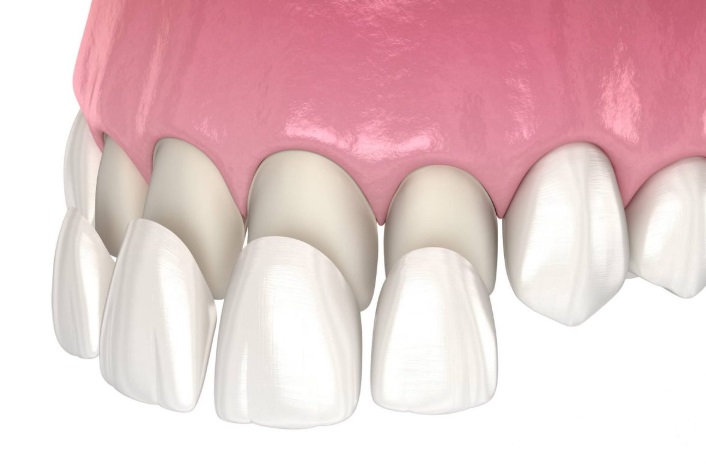
Veneers are a cosmetic dental treatment used to change the appearance of the front teeth. This article covers what they are, the two main types, what the procedure involves, the risks, and what to ask when choosing a practitioner.
What are Teeth Veneers?
Teeth veneers are thin, custom-made shells of porcelain or composite resin bonded to the front surface of the teeth to change their appearance. They are used for discolouration, chips, small gaps and minor irregularities in tooth position.
Veneers are cosmetic. They do not treat decay, gum disease or bite problems, and those conditions need to be addressed first.
IMPORTANT — most veneer treatment involves permanently removing a layer of enamel from the front of otherwise healthy teeth. Enamel does not grow back. Once teeth are prepared for veneers they will need veneers or crowns for life, and those restorations will need replacing periodically at ongoing cost. Understand this before agreeing to treatment.
Why people consider veneers
Dental porcelain veneers change the colour and shape of teeth in a small number of appointments, which is why some people prefer them to longer treatments.
Porcelain is more resistant to staining than natural teeth or composite. Published estimates commonly put the lifespan of porcelain veneers at around 10 to 15 years, but this varies considerably with the individual, the bite, oral hygiene and habits such as grinding. Some fail earlier, and none are permanent.
The preparation is less extensive than for a crown, but it is not minimal and it is not reversible. Local anaesthetic is commonly used, and sensitivity afterwards is common.
Types of Teeth Veneers
Porcelain Veneers
Porcelain veneers are made in a dental laboratory to match the colour and shape agreed at planning. The process requires impressions or digital scans, at least two appointments, and temporary veneers in between.
Porcelain is more resistant to staining and wear than composite, but it cannot be repaired if it chips. A damaged porcelain veneer generally has to be replaced.
Composite Veneers
Composite veneers are built up directly on the tooth from a tooth-coloured resin, often in a single visit. They cost less and generally require less removal of enamel, and in some limited cases none at all.
Composite stains, chips and wears more readily than porcelain and generally has a shorter lifespan. It can usually be repaired or added to, which is an advantage over porcelain.
The Application Process
- Your dentist examines your teeth, gums and bite, takes any necessary X-rays and discusses what you want to change. This appointment establishes whether veneers are appropriate and what the alternatives are. You should receive an explanation of the risks and a written quote.
- A layer of enamel is removed from the front of the teeth being treated. This step is irreversible. Impressions or scans are taken and sent to the laboratory for porcelain veneers.
- The veneers are tried in to check fit and colour, adjusted as needed, then bonded to the teeth. Colour is agreed before bonding, because it cannot be changed afterwards without remaking the veneer.
What veneers can and cannot do
Veneers change the appearance of the front surfaces of teeth. They do not move teeth. Where teeth are significantly crowded or rotated, or where the bite is the underlying problem, orthodontic treatment addresses the cause. Using veneers instead can mean removing considerably more enamel than would otherwise be needed.
Veneers do not whiten adjacent natural teeth, and their colour does not change over time while natural teeth may darken. Where whitening is planned, it is usually done before veneer shades are matched.
Results vary between individuals depending on the starting condition of the teeth, the bite, the amount of enamel available and the treatment plan. No outcome can be guaranteed.
Maintenance
- Regular brushing, flossing and dental check-ups. The margin where a veneer meets the tooth is a site where decay can begin, so hygiene around veneers matters.
- Use a non-abrasive toothpaste and a soft-bristled brush.
- Avoid biting hard objects, and tell your dentist if you grind or clench your teeth. Grinding is a common cause of veneer failure and a nightguard may be recommended.
- Porcelain resists staining well, but the bonding margins of both porcelain and composite can discolour over time.
Risks and Limitations
Veneers are elective cosmetic dentistry treatment and carry risks that should be explained to you before you proceed:
- irreversible enamel removal, committing the teeth to restorations permanently
- tooth sensitivity, usually temporary but sometimes persistent
- gum irritation, and recession over time exposing the veneer margin
- chipping, cracking or debonding requiring repair or replacement at further cost
- the possibility that a prepared tooth requires root canal treatment or extraction
- colour that cannot be altered once made and may not match natural teeth as they age
- a finite lifespan requiring periodic replacement
Veneers are generally not appropriate where there is active decay or gum disease, insufficient enamel, significant grinding, or a bite that would place excessive force on them.
Choosing a Practitioner
- Registration and qualifications
Check that the practitioner is registered with the Dental Board of Australia using the Ahpra public register. The register also shows whether a practitioner holds specialist registration.
- Discussion of alternatives
A consultation should cover the alternatives to veneers, including orthodontic treatment, whitening and composite bonding, and why one is being recommended over another for your case.
- Written information
You should receive a written quote setting out what is included, and a clear explanation of the risks, before agreeing to anything.
Veneers at North Sydney Dentistry
Our dentists provide both porcelain and composite veneers as part of general dental practice, using digital impressions and laboratory-fabricated restorations for porcelain work. At your consultation we examine your teeth and gums, discuss the options including those involving less enamel removal, explain the risks and provide a written quote. Where veneers are not appropriate for your case we will tell you.
To find out whether veneers are suitable for you, contact us to arrange a consultation.