
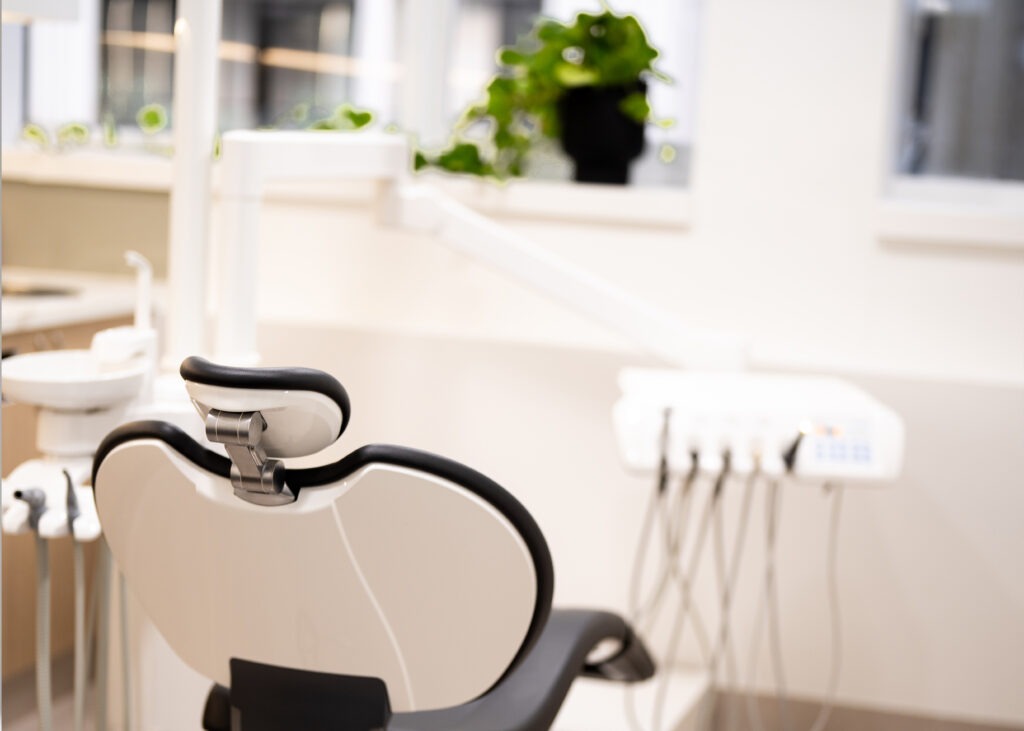
At your first Invisalign consultation, your dentist examines your teeth and gums, talks through your goals, and works out whether clear aligners are suitable. You will usually have a digital scan and any X-rays needed, then discuss options, timeframes and costs before deciding anything.
There is no obligation to start treatment at the appointment. The aim is to give you clear information so you can decide in your own time.
Before your appointment
A little preparation helps you get the most from your visit. Think about what bothers you about your teeth, whether it is crowding, gaps, a tooth that has moved, or your bite.
It also helps to bring:
- A list of any medications and medical conditions
- Details of previous orthodontic treatment, if any
- Recent dental X-rays, if you have had them taken elsewhere
- Your health fund details, if you want to check extras cover
For background on treatment, costs and timelines, our Invisalign in North Sydney guide is a useful read beforehand.
If you wear aligners or a retainer from earlier treatment, bring them along too. They can help your dentist see how your teeth have changed since then.
It is also worth thinking about your daily routine. Aligners need to be worn 20–22 hours a day, so consider how they will fit around work, meals and exercise.
The examination
Your dentist will start by checking the overall health of your teeth and gums. Teeth need to be healthy before they are moved, so any decay or gum disease is usually treated first.
They will also look at how your teeth bite together, how your jaw moves, and the position of individual teeth. This helps them understand the cause of the issue, not just what it looks like.
X-rays
X-rays show roots, bone levels, and any impacted or missing teeth. They help your dentist plan safe movement and pick up problems that are not visible in the mouth.
Your dentist may also ask about habits such as grinding, clenching, thumb sucking in childhood or tongue thrusting. These can influence why teeth moved and how stable the result will be.
If any treatment is needed before aligners, such as fillings, a professional clean or gum care, your dentist will explain this and include it in your plan.
The digital scan and simulation
Instead of messy impression putty, a small handheld scanner captures a 3D image of your teeth. It takes a few minutes and is generally comfortable.
The scan can be used to create a simulation showing how your teeth may move during treatment. This is a helpful planning tool, but it is not a promise of the final result. Results vary between people, and some teeth move less predictably than others.
If you go ahead, your dentist uses the scan to plan the detailed tooth movements and order your aligners.
Seeing a simulation can also help you decide whether the change is what you are hoping for. If you have questions about how a particular tooth will move, ask your dentist to walk you through it on screen.
Talking through your options
Once your dentist has assessed your teeth, they will explain whether Invisalign suits you and which option fits your case. The options range from Express for minor corrections through Lite and Moderate to Comprehensive for more involved cases.
Read Invisalign Lite vs Comprehensive to understand how these differ. If aligners are not the right fit, your dentist may suggest braces, and complex bite cases may be referred to an orthodontic practice.
Costs and payment
You will receive a written treatment plan with your fee. In Sydney, Invisalign typically costs $7,000–$10,000 depending on the case. Prices are a guide; your exact fee is confirmed in a written treatment plan after your assessment.
An interest-free payment plan is available from $25 per week, subject to eligibility and terms. See our Invisalign cost page for more detail. We can also provide item numbers so you can check any benefit with your health fund.
If you have questions about the fee, ask what is included, such as refinements, review visits and retainers. A clear breakdown makes it easier to compare options and plan your budget.
Risks and questions to ask
Your dentist will explain the risks and limitations, including tenderness with new aligners, a temporary lisp, the need for 20–22 hours of daily wear, the chance of refinements, and the need for retainers afterwards.
Useful questions to ask include:
- What are the realistic results for my teeth?
- How long is treatment likely to take?
- What is included in the fee, including refinements and retainers?
- What would happen if I chose not to have treatment?
- Are there alternatives I should consider?
You may also find Invisalign vs braces for adults helpful when weighing up options.
Write your questions down before the appointment so you do not forget them. There is no such thing as a silly question when it comes to your own treatment.
Booking your consultation
North Sydney Dentistry is at Level 1, Suite 102/71 Walker St, North Sydney, a two-minute walk from North Sydney station. We are open Monday to Friday, 9am–6pm.
To book, call (02) 8090 1108 or contact us online. You can read more about treatment on our Invisalign page.
After the consultation you will have time to read your treatment plan, check any fund benefit, and ask further questions. If you decide to go ahead, the next step is usually an appointment to fit your first aligners and any attachments.
Frequently asked questions
How long does an Invisalign consultation take?
The length depends on the exam, scan and any X-rays needed. Our team can tell you how much time to allow when you book.
Do I have to start treatment on the day?
No. The consultation is for assessment and information, and you can take your treatment plan home to consider before deciding.
What if I have gum disease or a cavity?
Teeth and gums need to be healthy before they are moved, so your dentist will usually recommend treating decay or gum disease first.
Book a consultation
North Sydney Dentistry is at Level 1, Suite 102/71 Walker St, North Sydney, a two-minute walk from North Sydney station. We’re open Monday to Friday, 9am to 6pm. Call (02) 8090 1108 or book online.
This article is general information only and is not a substitute for advice from your own dentist or doctor. Any surgical or invasive procedure carries risks. Before proceeding, you should seek a second opinion from an appropriately qualified health practitioner.