
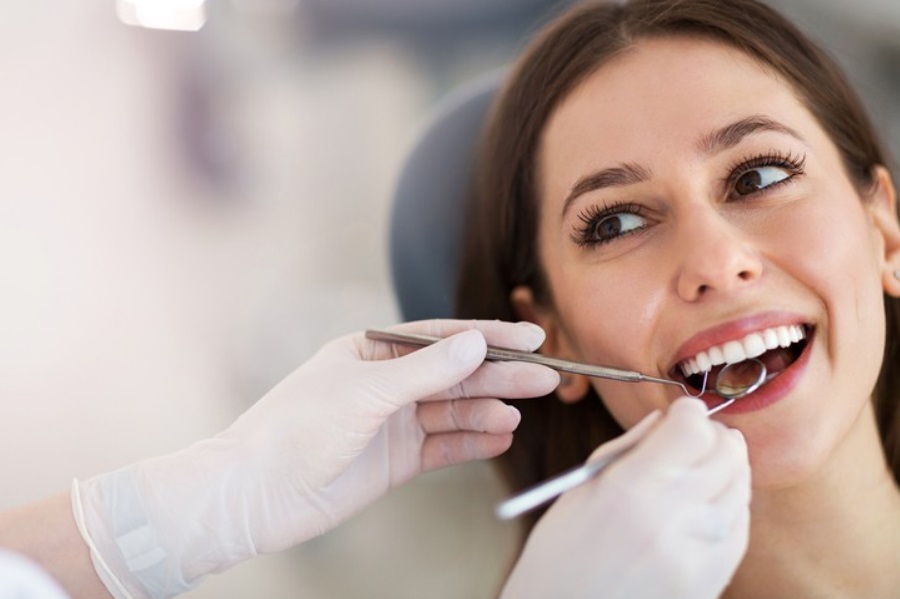
What happens at a dental check-up? In most cases, your dentist reviews your health history, examines your teeth, gums and soft tissues, takes X-rays if needed, then cleans your teeth and talks you through what they found. At our practice, a first visit usually takes about 45 to 60 minutes.
Knowing each step can make the appointment feel much easier, especially if you’re nervous or it’s been a while. For the bigger picture, including costs and how often to book, see what a dental check-up involves.
Before you arrive
A little preparation saves time at the desk and helps your dentist give you accurate advice. Bring or note down:
- your health fund card, so eligible members can claim on the spot through HICAPS
- a list of your medications and supplements, or photos of the packets
- any allergies and medical conditions, including recent surgery or pregnancy
- the name of your previous dentist, in case recent X-rays can be sent across
- any symptoms or questions, such as sensitivity, bleeding gums or a chipped tooth
Brush and floss as usual beforehand, and try to arrive a few minutes early if it’s your first visit.
What happens at a dental check-up, step by step
Step 1: Arrival and forms
New patients fill in a registration form with contact and health fund details, a medical history questionnaire and a consent section. Returning patients are usually just asked to confirm whether anything has changed since their last visit.
Step 2: Your medical and dental history
Your dentist goes over your form with you. They’ll ask about conditions such as diabetes or heart problems, medicines including blood thinners, allergies, pregnancy, and whether you smoke or vape, because these can affect your mouth and how treatment is planned.
They’ll also ask about your teeth: pain, sensitivity, bleeding, grinding, jaw clicking, dry mouth, or anything you’d like to change. This is a good moment to mention if you feel anxious. We can take things slowly, and happy gas may be an option.
Step 3: Examining your teeth
Using a small mirror and probe, your dentist checks each tooth for decay, cracks, wear and erosion, and looks at existing fillings, crowns and bridges. They often call out findings for a dental assistant to record on your chart, so don’t worry about the numbers and codes you hear.
Step 4: Gum pocket measurements
Next, your dentist checks your gums with a periodontal probe, a thin, blunt instrument marked in millimetres. They gently slide it into the small space between each tooth and the gum and note the depth at several points around the tooth.
Shallow readings with no bleeding usually point to healthy gums. Deeper pockets, bleeding or loose teeth can be signs of gum disease. The measurements also give a baseline your dentist can compare against at future visits. Probing may feel a little tender if your gums are inflamed, but it only takes a few minutes.
Step 5: Soft tissue check
Your dentist examines your tongue, cheeks, lips, the floor and roof of your mouth and the back of your throat, looking for lumps, ulcers, or white or red patches. They may also feel along your jaw and neck and check how your jaw joints move. Most findings are harmless, but this check helps pick up changes that need a closer look.
Step 6: X-rays, if needed
Bitewing X-rays are small images taken while you bite on a holder. They show decay between the back teeth, under old fillings, and the bone levels around your teeth. A panoramic X-ray (OPG) is taken by a machine that moves around your head and gives a wide view of all your teeth and jaws, including wisdom teeth.
Dental X-rays use a low dose of radiation, and your dentist only takes them when they’ll add useful information. Let us know if you’re pregnant or might be.
Step 7: Scale, polish and fluoride
Your dentist or an oral health therapist removes plaque and tartar with an ultrasonic scaler, which uses vibration and a fine water spray, then finishes with hand instruments. A polish removes surface stains, and a fluoride treatment helps strengthen enamel. Read more about teeth cleaning in North Sydney.
If there’s a lot of tartar, or it sits below the gumline, your dentist may suggest finishing the clean over more than one visit.
Your results, treatment plan and quote
Before you leave, your dentist explains what they found, often using your X-rays on screen. If anything needs attention, they’ll talk through the options, how urgent each item is, and what may happen if you wait.
Any treatment beyond the check-up is quoted first. Your written treatment plan lists dental item numbers, which you can give to your health fund to find out what you’ll get back before you decide. You can also ask questions or take time to think it over.
Booking your next recall
Finally, your dentist recommends when to come back. For most people this is every 6 to 12 months, but it depends on your risk of decay and gum disease, and some people are asked to return sooner. Booking before you leave makes it easier to stay on track.
We have HICAPS, so eligible members can claim at the desk and pay any gap on the day. If you’re new to our North Sydney practice, check the current offer on our new patient specials page before you book.
Between visits
Brush twice a day with a fluoride toothpaste, clean between your teeth daily, and limit sugary snacks and drinks. These habits are the foundation of preventive dentistry and make each check-up quicker and more comfortable.
If you have severe pain, swelling or a broken tooth, don’t wait for your next check-up: see a dentist promptly through our emergency dentist page. Call 000 or go to hospital if you have difficulty breathing or swallowing, or facial swelling that is spreading quickly.
Frequently asked questions
How long does a dental check-up take?
A first visit at our practice usually takes about 45 to 60 minutes because it includes a comprehensive examination and any X-rays needed. Return visits are often a little shorter.
Does measuring gum pockets hurt?
Most people feel only light pressure. If your gums are inflamed, probing may feel a little tender or cause some bleeding, which gives your dentist useful information.
Will I have X-rays at every check-up?
Not necessarily. Your dentist decides based on your risk of decay and gum disease and when you last had X-rays. Let us know if you’re pregnant or might be.
Do I have to start treatment straight away?
No. Your dentist will explain the findings and give you a treatment plan with a quote first, so you can check with your health fund and decide what to do.
Book your check-up
North Sydney Dentistry is at Level 1, Suite 102/71 Walker St, North Sydney, a two-minute walk from North Sydney station. We’re open Monday to Friday, 9am to 6pm. Call (02) 8090 1108 or book online.
This article is general information only and is not a substitute for advice from your own dentist or doctor. Any surgical or invasive procedure carries risks. Before proceeding, you should seek a second opinion from an appropriately qualified health practitioner.