
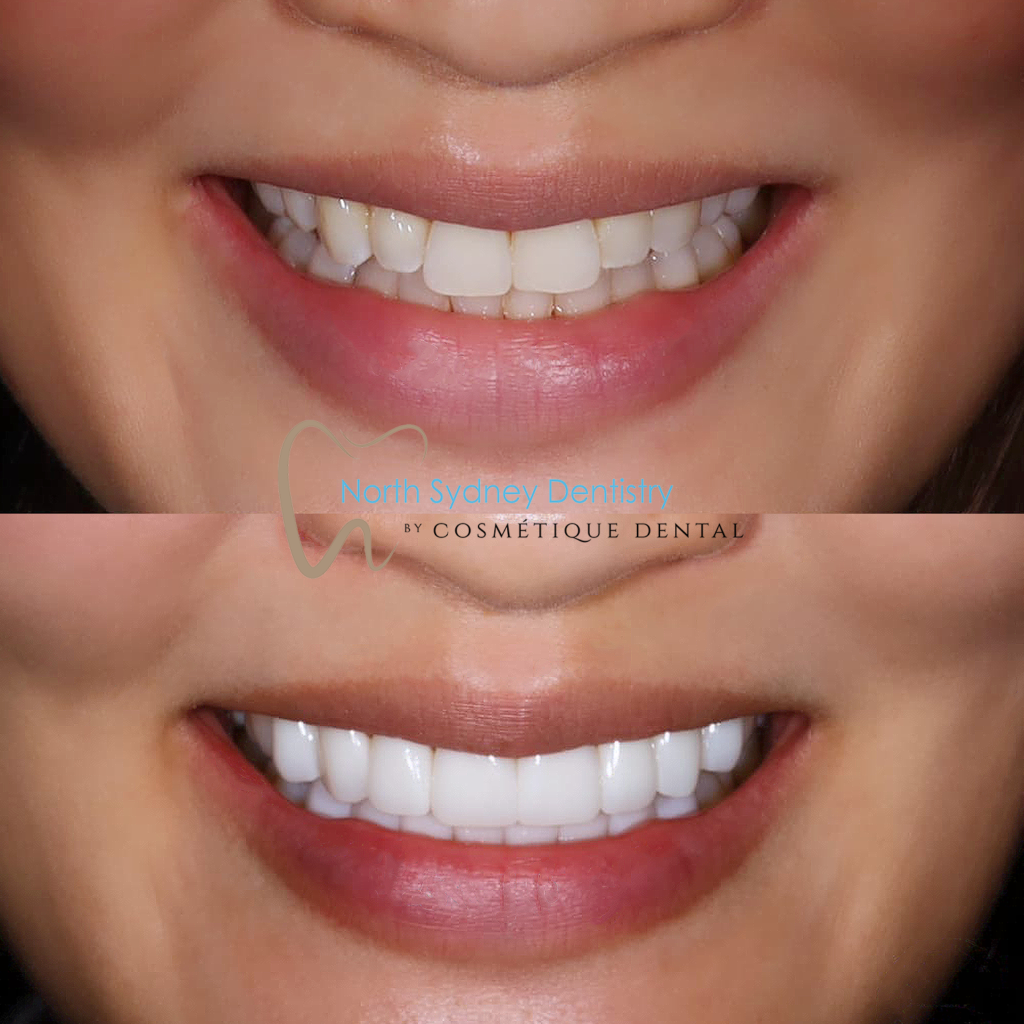
*Please note that the results shown are specific to the individual patient and may not be representative of the outcomes of others.
If you are considering veneers, it is reasonable to want to understand what changes and what does not. This article explains what veneers are, what the process involves, what determines the result, and the risks and ongoing commitments that come with them.
What are Dental Veneers?
Dental veneers are thin shells bonded to the front surface of the teeth to change their colour, shape, size or length. They are made from porcelain or composite resin.
Veneers are a cosmetic treatment. They do not treat decay, gum disease or bite problems, and those conditions must be addressed before veneers are considered.
IMPORTANT — most veneer treatment permanently removes a layer of enamel from the front of otherwise healthy teeth. Enamel does not grow back. Once teeth are prepared, they will require veneers or crowns for life and those restorations will need replacing periodically at ongoing cost. This is the key fact to weigh before agreeing to treatment.
The Two Types
Porcelain Veneers
Porcelain veneers resist staining well and are made in a dental laboratory. They require more preparation than composite, meaning more enamel is removed. They cannot generally be repaired if damaged and instead need replacing.
Composite Veneers
Composite veneers require less enamel removal and can often be completed in a single visit. They cost less and can usually be repaired, but they stain, chip and wear more readily than porcelain and generally have a shorter lifespan.
What determines the result
The change achievable in any case depends on the starting colour, shape and position of the teeth, how much enamel is available, the health of the teeth and gums, the bite, and the treatment plan agreed at the outset.
Veneers change the front surfaces of teeth. They do not move teeth. Where teeth are significantly crowded or rotated, or where the bite is the underlying issue, orthodontic treatment addresses the cause, and using veneers instead can mean removing considerably more enamel than would otherwise be necessary. Alternatives, including orthodontic treatment, whitening and composite bonding, should be discussed with you.
Veneers do not whiten adjacent natural teeth, and their colour cannot be changed once made. Where whitening is planned, it is usually done before veneer shades are matched.
Results vary between individuals and no outcome can be guaranteed. Any image or description of a result reflects an individual case and is not a prediction of what any other person will achieve.
What veneers can address
Veneers are used for discolouration that does not respond to whitening, worn or chipped teeth, small gaps, and teeth that are slightly irregular in shape or position. Whether they are appropriate in your case is a clinical judgement made after examination.
The Application Process
- Initial consultation. At North Sydney Dentistry we examine your teeth, gums and bite, take any necessary X-rays and discuss what you want to change and the options for achieving it. You should receive an explanation of the risks and a written quote before anything proceeds.
- A layer of enamel is removed from the front of the teeth being treated. This step is irreversible. Composite requires less preparation than porcelain. For porcelain, impressions or digital scans are taken and temporary veneers may be fitted while the laboratory work is completed.
- The veneers are tried in to check fit and colour, adjusted, then bonded and cured. Colour is confirmed before bonding because it cannot be altered afterwards.
Looking after veneers
- Daily care
Brush twice daily, floss, and use a non-abrasive toothpaste. The margin where a veneer meets the tooth is a site where decay can begin, so cleaning around veneers matters.
- Regular check-ups
Regular examinations allow the veneers, the underlying teeth and the gums to be monitored. Problems at the margins are easier to manage when found early.
- Habits to avoid
Avoid biting nails, chewing ice and opening packaging with your teeth. Tell your dentist if you grind or clench, as grinding is a common cause of veneer failure and a nightguard may be recommended.
Risks and Limitations
Veneers are elective cosmetic treatment and carry risks that should be explained to you in full before you agree to proceed:
- irreversible enamel removal, committing the teeth to restorations permanently
- tooth sensitivity, usually temporary but sometimes persistent
- gum irritation, and recession over time exposing the veneer margin
- chipping, cracking or debonding requiring repair or replacement at further cost
- the possibility that a prepared tooth requires root canal treatment or extraction
- colour that cannot be altered once made and may not match natural teeth as they age
- a finite lifespan requiring periodic replacement
Veneers are generally not appropriate where there is active decay or gum disease, insufficient enamel, significant grinding, or a bite that places excessive force on the front teeth.
Is treatment right for you?
Deciding on veneers involves weighing what you want to change against the amount of enamel that would be removed, the cost of the initial treatment and of replacement over time, and the alternatives available. It is reasonable to take time over the decision and to seek a second opinion.
At North Sydney Dentistry we provide both porcelain and composite veneers. Our dentists are registered with the Dental Board of Australia, and registration can be checked on the Ahpra public register. To find out whether veneers are appropriate for your case, contact us to arrange a consultation.