
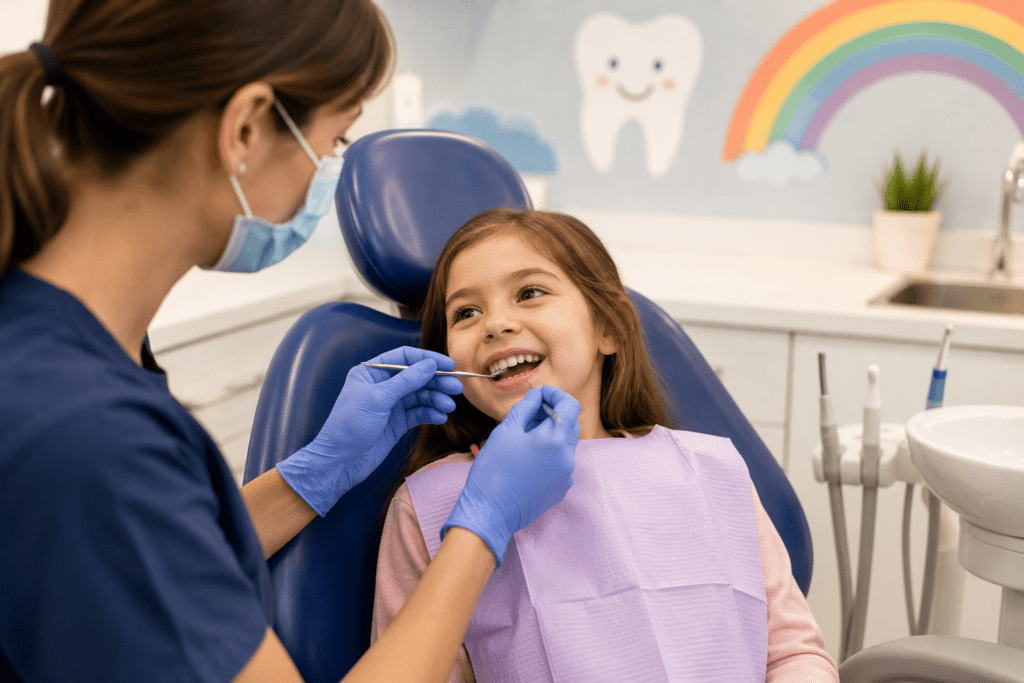
A children’s dental emergency usually means a knocked-out, broken or pushed-in tooth, a bad toothache, facial swelling or a cut to the lip or tongue. Stay calm, check for serious injuries first, then call a dentist as soon as possible. Call 000 straight away if your child is choking, struggling to breathe or has had a hard knock to the head.
Kids are active, and falls at the playground, on scooters and at weekend sport around North Sydney are common causes of tooth injuries. This guide covers what parents most often face. For general advice, see what counts as a dental emergency.
When to call 000 or go to hospital
Call 000 or go to your nearest hospital emergency department if your child:
- is choking, or has difficulty breathing or swallowing
- has swelling spreading to the eye, neck or floor of the mouth
- has bleeding that won’t stop after 15–20 minutes of firm pressure
- may have a broken jaw, or can’t open or close their mouth properly
- has had a knock to the head with loss of consciousness, vomiting, drowsiness or confusion
- has a high temperature with facial swelling, or seems very unwell
If you think your child has swallowed a button battery or magnet, call 000 immediately, even if they seem well. If they’ve swallowed a baby tooth or another small object and are breathing, talking and swallowing normally, call healthdirect on 1800 022 222 or see your GP for advice.
Knocked-out tooth: baby tooth or adult tooth?
First work out which kind of tooth it is. Baby front teeth usually start to loosen around age 6, and adult front teeth usually come through between about 6 and 8. If you’re not sure, don’t put it back in. Keep it in milk and see a dentist straight away.
Knocked-out baby tooth
Never put a baby tooth back in. Doing so can damage the adult tooth developing underneath. Instead, press clean gauze on the gap to stop the bleeding, keep the tooth if you find it and bring your child in to be checked. If you can’t find the tooth, a dentist should check that it hasn’t been pushed up into the gum.
Knocked-out adult tooth
- Hold the tooth by the crown (the white part), not the root.
- If it’s dirty, rinse it briefly in milk or water. Don’t scrub it.
- Gently push it back into the socket and have your child bite on a clean cloth to hold it.
- If you can’t, put it in a small container of milk. Don’t ask a young child to hold it in their mouth, as they may swallow it.
- See a dentist immediately, ideally within 30 minutes.
Chipped teeth, pushed-in teeth and mouth cuts
Chipped or broken teeth
Rinse your child’s mouth with warm water and hold a cold pack wrapped in a cloth against the outside of the lip or cheek to reduce swelling. Keep any broken pieces in milk or saline and bring them with you.
Book in the same day if the tooth is painful, has a sharp edge or shows pink or red in the centre, which can mean the nerve is exposed.
Pushed-in or loose teeth
A tooth that has been pushed up into the gum, moved out of position or become loose should also be seen the same day, even if it’s a baby tooth. Don’t try to move it back yourself.
After a knock, a baby tooth can turn grey weeks later. Let your dentist know if you notice this, or if a lump appears on the gum above it.
Cuts to the lips, tongue and gums
The mouth bleeds a lot, but most small cuts heal well. Rinse gently, then press a clean cloth or gauze firmly on the cut for 15–20 minutes. A wrapped cold pack on the outside of the lip can help with swelling.
See a doctor or go to hospital if the cut is deep or gaping, goes right through the lip, crosses the edge of the lip or won’t stop bleeding, as it may need stitches. If a tooth was chipped at the same time, a dentist may check that no fragment is caught in the lip.
Toothache in kids
Toothache in children is often caused by decay, but it can also come from food trapped between teeth, a loose baby tooth or new adult molars coming through, usually around age 6 and again around age 12.
- Gently brush and floss around the sore tooth to remove any trapped food.
- If your child is old enough to spit, a warm salty water rinse may help.
- Hold a wrapped cold pack against the outside of the cheek.
- Give children’s pain relief only as directed for your child’s age and weight on the pack, or as advised by a pharmacist. Don’t give aspirin to children unless a doctor advises it.
- Don’t put anything on the gum or tooth.
Toothache with facial swelling or a fever needs to be seen the same day. If the swelling is spreading, go to hospital.
Preventing a children’s dental emergency
- Use a mouthguard for contact sports, at games and training. A custom-fitted mouthguard from a dentist usually fits more securely than an off-the-shelf one, and needs replacing as your child’s mouth grows.
- Make sure helmets are worn for bikes, scooters and skateboards.
- Keep button batteries and small magnets out of reach.
- Discourage chewing ice, pens and hard lollies.
- Keep up regular check-ups. Our children’s dentistry visits help find decay before it causes pain.
What happens at the appointment?
We aim to see urgent problems as soon as possible, often on the same day. When you bring your child to our emergency dentist in North Sydney, we’ll ask what happened, check your child gently and take X-rays if needed. We’ll explain what we find and your options, including any costs, before starting treatment, and go at a pace that helps your child feel settled.
Frequently asked questions
Should I put my child’s knocked-out baby tooth back in?
No. Putting a baby tooth back in can damage the adult tooth developing underneath. Stop the bleeding with gauze, keep the tooth and bring your child to a dentist to be checked.
What pain relief can I give my child for toothache?
Children’s paracetamol or ibuprofen may help, given only as directed for your child’s age and weight on the pack or as advised by a pharmacist. Don’t give aspirin to children unless a doctor advises it.
Does a chipped baby tooth need to be seen by a dentist?
Yes. Even a small chip can expose the inner layers of a baby tooth or be a sign of a deeper injury. Book in soon, and on the same day if the tooth is painful, loose or shows pink or red.
What should I do if my child swallows a tooth or small object?
If your child is choking or struggling to breathe, call 000. If they’re breathing and swallowing normally, call healthdirect on 1800 022 222 or see your GP. Call 000 straight away for a swallowed button battery or magnet.
Need help now?
North Sydney Dentistry is at Level 1, Suite 102/71 Walker St, North Sydney, a two-minute walk from North Sydney station. We’re open Monday to Friday, 9am to 6pm, and keep time aside for urgent problems where we can. Call (02) 8090 1108 or book online.
This article is general information only and is not a substitute for advice from your own dentist or doctor. Any surgical or invasive procedure carries risks. Before proceeding, you should seek a second opinion from an appropriately qualified health practitioner.